"Sarah was the only person I could bear thinking about right now" (Rosnay 177).
Julia was going through a very rough time prior to stating this line. She has found out she is pregnant again and her husband is not impressed. He gave her two choices; either get an abortion or they are getting a divorce. Julia did not want to give up this baby, she was so happy when she found out she was pregnant again and she thought her husband would be too. Unfortunately this was not the case and there was no making Bertrand change his mind about this baby. Eventually Julia decided it would be best for her marriage if she got an abortion-even though it was not at all what she wanted to do. During this time when she stated this line she was in the clinic awaiting her surgery. I found it very symbolic that Julia could only tolerate thinking about Sarah. I feel that Julia can only think about Sarah because of how guilty she feels about getting this abortion. Sarah did everything in her power to save her little brother. No matter what anyone said or did Sarah never gave up; she hid him in a cupboard away from the police, she escaped from the camp, walked a very long distance, and found a family to bring her back to Paris. Then Julia is just letting her husband tell her what to do even though she wants this baby. She has certainly not done all she could to save this child. She is not fighting for this child's life like she should. Sarah's Strength Brings Julia To Shame.
Thursday, October 27, 2011

Wednesday, October 19, 2011
Who is Amelie?
"That's where I told him I found out about Amelie. Not tonight. Not now. Amelie was over. Was she, though? Was she really? I had to admit I was not sure. But for now, I did not want to know. I did not want to see. There was going to be a new baby" (Rosnay 101). Julia has brought up this person-Amelie- a few times now. I am beginning to wonder if Amelie is a baby that she had lost in the past. She mentions in the chapter prior to this that she was pregnant five years ago, after two miscarriages. She says it had been a nightmare. The baby was growing outside the womb and then died. She had to undergo an operation and had her one ovary removed. Maybe she named the baby Amelie before she discovered that it had died, maybe thats why Julia is so upset when she mentions Amelie.
A Symbolic Death to Maturing Children
"When the children awoke, the night had fallen. The forest was no longer the peaceful, leafy place they had wandered through that afternoon" (Rosnay 107).
Patterns in Literature
Often in literature, you will notice a lot of morning or spring like imagery when children are mentioned. It symbolizes new beginnings and innocence. In the particular sentences that I found, I noticed that this was not the case. Instead of the time of day be morning and the season being spring, there was night and autumn imagery. I think the word children symbolizes the innocence of the girls, while night symbolizes a symbolic death (perhaps of their innocence), and autumn symbolizes the maturity that these two girls have had to develop. The fact that all three of these imageries were brought up in just a couple sentences could symbolize the disorder these two girls were dealing with at the time.
Patterns in Literature
Often in literature, you will notice a lot of morning or spring like imagery when children are mentioned. It symbolizes new beginnings and innocence. In the particular sentences that I found, I noticed that this was not the case. Instead of the time of day be morning and the season being spring, there was night and autumn imagery. I think the word children symbolizes the innocence of the girls, while night symbolizes a symbolic death (perhaps of their innocence), and autumn symbolizes the maturity that these two girls have had to develop. The fact that all three of these imageries were brought up in just a couple sentences could symbolize the disorder these two girls were dealing with at the time.
Tuesday, October 18, 2011
Character
1942- Main Characters
Sarah Starzynski: A very brave ten year old girl, who is arrested with her family by the French police in the Vel'd'Hiv roundup. She is very bright for her age and curious. Desperate to protect her little brother Micheal she locks him in a cupboard located in a bedroom. She made a promise to him that she would come back to rescue him as soon as they were released. She was sure that he would be safe in there. So far throughout the story Sarah has been very courageous and strong-much more so then her parents. After a few weeks Sarah- along with a friend named Rachel- escaped from the camp. Sarah is still very determined to go save her little brother, not a day goes by she does not mention him. She has not yet ever given up on trying to save her little brother Micheal from the deep dark cupboard.
Micheal Starzynski: Sarahs four year little brother. He was very scared when he peeped through the door and saw the men arresting his family. When Sarah went to go wake him up to get him ready to leave the house, Micheal refused to move. He insisted on hiding in their secret place- a long deep cupboard that was hidden in the surface of the wall in their bedroom. He was not afraid to hide in the cupboard, he felt safe in there.
Mrs. Starzynski- Sarah and Micheal's mother. The mother turned pale when she realized who was at the door. Her fingers began to tremble, her mouth became dry, she was drained and frozen. She knew exactly why the police were there arresting her and her family and she was terrified. She could no longer stand up straight and she began cowering. She was numb with horror. She is very weak and hopeless.
Mr.Starzynski-Sarah and Micheal's father. Knew before hand that there was going to be trouble approaching for men, so he began hiding in the basement every night. Little did he know that not only men were being arrested but ALL Jewish people including children. He finally came out of hiding when he realized his family was being arrested, he was loyal and protective of his family and did not want them to go through with this on their own. He seems to be a very brave man, who loved his children to death. He is very patient with Sarah and always answers everything she asks- she tends to ask a lot of questions- which would imply that he is a very smart man.
2002- Main Characters
Julia Jarmond- Mother to Zoe, wife to Bertrand. She is a journalist who is asked to write an article about the Vel' d'Hiv. She becomes very involved with the history of the roundup in France and can not seem to get it off her mind. She is determined to figure out all the details about the roundup in 1942 and will not stop till she gets there. Julia is a very loving mother to Zoe, and a very devoted wife to Bertrand-she is very obedient.
Bertrand Jarmond- Father to Zoe, husband to Julia. He is a very selfish man who only thinks about himself. You see very little communication between him and his daughter throughout this book because he is always to 'busy'. He treats his wife more like a child then a wife, always making decisions for her, always bringing her down and just the way he speaks to her in general. He is a very devoted French man, who refuses to believe that French people also helped out with the roundup in 1942.
Zoe Jarmond- Daughter of Julia and Bertrand. Very clever little girl who loves her mother. She seems to be very mature for her age and she is very curious. She is very close to her mother.
Micheal Starzynski: Sarahs four year little brother. He was very scared when he peeped through the door and saw the men arresting his family. When Sarah went to go wake him up to get him ready to leave the house, Micheal refused to move. He insisted on hiding in their secret place- a long deep cupboard that was hidden in the surface of the wall in their bedroom. He was not afraid to hide in the cupboard, he felt safe in there.
Mrs. Starzynski- Sarah and Micheal's mother. The mother turned pale when she realized who was at the door. Her fingers began to tremble, her mouth became dry, she was drained and frozen. She knew exactly why the police were there arresting her and her family and she was terrified. She could no longer stand up straight and she began cowering. She was numb with horror. She is very weak and hopeless.
Mr.Starzynski-Sarah and Micheal's father. Knew before hand that there was going to be trouble approaching for men, so he began hiding in the basement every night. Little did he know that not only men were being arrested but ALL Jewish people including children. He finally came out of hiding when he realized his family was being arrested, he was loyal and protective of his family and did not want them to go through with this on their own. He seems to be a very brave man, who loved his children to death. He is very patient with Sarah and always answers everything she asks- she tends to ask a lot of questions- which would imply that he is a very smart man.
2002- Main Characters
Julia Jarmond- Mother to Zoe, wife to Bertrand. She is a journalist who is asked to write an article about the Vel' d'Hiv. She becomes very involved with the history of the roundup in France and can not seem to get it off her mind. She is determined to figure out all the details about the roundup in 1942 and will not stop till she gets there. Julia is a very loving mother to Zoe, and a very devoted wife to Bertrand-she is very obedient.
Bertrand Jarmond- Father to Zoe, husband to Julia. He is a very selfish man who only thinks about himself. You see very little communication between him and his daughter throughout this book because he is always to 'busy'. He treats his wife more like a child then a wife, always making decisions for her, always bringing her down and just the way he speaks to her in general. He is a very devoted French man, who refuses to believe that French people also helped out with the roundup in 1942.
Zoe Jarmond- Daughter of Julia and Bertrand. Very clever little girl who loves her mother. She seems to be very mature for her age and she is very curious. She is very close to her mother.
Friday, October 14, 2011
Winter Fires
Patterns In Literature and Elements
"Where I remember so many winter fires burning" (Rosnay 10).
In this line I noticed two very symbolic words: winter and fire.
Season: winter
Time of day: night
Stage of life: old
Symbolism: symbolic end or death.
- The word "winter" suggests that someone- perhaps the narrator- is going to have a symbolic end or death. I predict that maybe the narrator is going to leave her selfish husband soon.
Element: Fire
Personality Trait: action oriented
Literary Symbolic Significance: symbol of transformation and regeneration. Purification and destruction of evil.
- The word "fire" proposes that there is going to be a lot of action which could lead to a transformation in the story, probably for the worse.
Sunday, October 9, 2011
Secret Place
"In all her ten years, she had never seen her mother cry" (Rosnay 7).
The fact that this little girl had never seen her mother cry before suggests that something terrible is going to happen. The little girl still does not understand what is going on yet and wants to tell her mother to stop crying, she was ashamed to see her mother cry. It is ironic that the mother is the one who is crying while the daughter stands brave without a single tear. Usually the mother is the one comforting their children, not the other way around.
"I'm going to our secret place" (Rosnay 8).
This "secret place" is a long deep cupboard hidden in the surface of the wall of their bedroom. They used to hid there all the time- it was like a little house inside. They had a flashlight, cushions, toys, books, and a flask of water in there. The little boy felt safe in their secret place and he insisted he stayed in there while the rest of his family went to where ever they were going. The little girl finally agreed to let him stay. She locked the door and kept the key in her pocket. He would be safe she thought. She would come back to get him later on in the day when they were aloud to leave. I predict that the girl will not be aloud to leave the camps that day. I believe that this story is going to revolve around this little girl trying to escape and rescue her little brother. I think she is going to do everything and anything to save her brother but by the time she is let out it will be to late. This secret place is going to be where her brother dies.
Unkown words and definitons:
cajoled- To persuade by flattery, gentle pleading, or insincere language.
The fact that this little girl had never seen her mother cry before suggests that something terrible is going to happen. The little girl still does not understand what is going on yet and wants to tell her mother to stop crying, she was ashamed to see her mother cry. It is ironic that the mother is the one who is crying while the daughter stands brave without a single tear. Usually the mother is the one comforting their children, not the other way around.
"I'm going to our secret place" (Rosnay 8).
This "secret place" is a long deep cupboard hidden in the surface of the wall of their bedroom. They used to hid there all the time- it was like a little house inside. They had a flashlight, cushions, toys, books, and a flask of water in there. The little boy felt safe in their secret place and he insisted he stayed in there while the rest of his family went to where ever they were going. The little girl finally agreed to let him stay. She locked the door and kept the key in her pocket. He would be safe she thought. She would come back to get him later on in the day when they were aloud to leave. I predict that the girl will not be aloud to leave the camps that day. I believe that this story is going to revolve around this little girl trying to escape and rescue her little brother. I think she is going to do everything and anything to save her brother but by the time she is let out it will be to late. This secret place is going to be where her brother dies.
Unkown words and definitons:
cajoled- To persuade by flattery, gentle pleading, or insincere language.
Selfish Bertrand
Reader Response Chart
Setting: Paris, May 2002
Unknown word: Marais and definition: A historic district in Paris, France.
This story reminds me of a time when I had to move away from my home into a new house. I was unsure if it was something I really wanted to do but in the end I had no choice.
What happened in this chapter: In this chapter the narrator is moving in to her husband's grandmother's old apartment. The narrator is unsure weither or not she wants to move, she seems to be doing it just for her husband Bertrand. Bertrand was late for the viewing of their new house because he was talking on the phone and insisted he could not get off- his wife and his child Zoe were annoyed. Eventually they just went up to look at the appartment without Bertrand.
An inner conflict: Narrator's husband had not really asked her for her advice about moving, he had just gone ahead with the whole thing by himself.
Thought from protaganist: Was not sure if she was happy about moving.
When did this take place: 2002
Significant qoutation: " We were going to leave the boulevard du Montparnasse, its noisy traffic, incessant ambulances due to three neighbouring hospitals, its cafe and resturants, for this quiet, narrow street on the right bank of the Seine" (Rosnay 4).
Emotions in this piece: annoyed, betrayl, anger, hate
Most important word to describe this piece: Selfishness.
A question I have: Why did Bertrand not ask his wife's advice? Did he not care about her feelings?
A lesson learned: Narrator is not actually from France, she is an English girl from America.
The charaters in this piece: Narrator, Bertrand, Zoe (daughter), Antoine, and Joshua.
Prediction: I predict that sometime during this story the narrator will eventually leave her husband Bertrand because of his selfishness.
Quotation from another character: "Like he can't get that person off the phone" (Rosnay 5).
Unkown word: gusto and definiton: Enthusiasm or energy
Somebody: Bertrand
Wanted: To move into his grandmother's old apartment.
But: He never asked his wife for her advice first. He just made the decision by himself.
So: Now his wife is unsure weither or not she is happy about moving.
A possible social commentary: Bertrand did not ask his wife for her advice about moving, he had gone ahead with the whole affair himself. This is an act of rebellion towards his wife and society.
My advice is you should always consider the feelings and happiness of your partner in a marriage. Do not just make decisions based on what makes you yourself happy.
A power conflict: Bertrand makes decisions without asking his wife for her personal opinion.

Setting: Paris, May 2002
Unknown word: Marais and definition: A historic district in Paris, France.
This story reminds me of a time when I had to move away from my home into a new house. I was unsure if it was something I really wanted to do but in the end I had no choice.
What happened in this chapter: In this chapter the narrator is moving in to her husband's grandmother's old apartment. The narrator is unsure weither or not she wants to move, she seems to be doing it just for her husband Bertrand. Bertrand was late for the viewing of their new house because he was talking on the phone and insisted he could not get off- his wife and his child Zoe were annoyed. Eventually they just went up to look at the appartment without Bertrand.
An inner conflict: Narrator's husband had not really asked her for her advice about moving, he had just gone ahead with the whole thing by himself.
Thought from protaganist: Was not sure if she was happy about moving.
When did this take place: 2002
Significant qoutation: " We were going to leave the boulevard du Montparnasse, its noisy traffic, incessant ambulances due to three neighbouring hospitals, its cafe and resturants, for this quiet, narrow street on the right bank of the Seine" (Rosnay 4).
Emotions in this piece: annoyed, betrayl, anger, hate
Most important word to describe this piece: Selfishness.
A question I have: Why did Bertrand not ask his wife's advice? Did he not care about her feelings?
A lesson learned: Narrator is not actually from France, she is an English girl from America.
The charaters in this piece: Narrator, Bertrand, Zoe (daughter), Antoine, and Joshua.
Prediction: I predict that sometime during this story the narrator will eventually leave her husband Bertrand because of his selfishness.
Quotation from another character: "Like he can't get that person off the phone" (Rosnay 5).
Unkown word: gusto and definiton: Enthusiasm or energy
Somebody: Bertrand
Wanted: To move into his grandmother's old apartment.
But: He never asked his wife for her advice first. He just made the decision by himself.
So: Now his wife is unsure weither or not she is happy about moving.
A possible social commentary: Bertrand did not ask his wife for her advice about moving, he had gone ahead with the whole affair himself. This is an act of rebellion towards his wife and society.
My advice is you should always consider the feelings and happiness of your partner in a marriage. Do not just make decisions based on what makes you yourself happy.
A power conflict: Bertrand makes decisions without asking his wife for her personal opinion.
Le Marais in Paris, France
Monday, October 3, 2011
Vel' d'Hiv Roundup
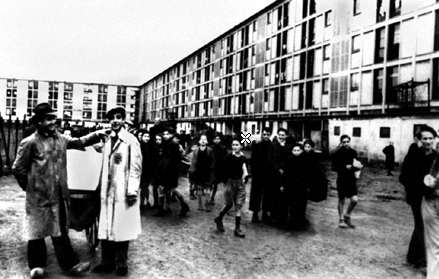
While reading this book I have noticed that the author brings up The Vel' d'Hiv Roundup a lot. I was not quite sure what that was exactly, so I researched it. I found out that the Vel' d'Hiv Roundup took place in July, 1942. There was about 13,152 Jewish men, women, and children forced out of their homes. The French police wanted this roundup to be done quietly so that they did not attract attention from the rest of the French population. This however was not the case. Many French people knew exactly what was going on because the word leaked out, and they tried to warn the Jews to flee or hide. The French Jews had no idea what was in store for them. They followed the law by registering for the census and made themselves available to deportation. For 70,00 Jews from France, their unknown stopover destination in the East was at Drancy. There is evidence of the brutality of the French guards in Drancy and the brutal conditions imposed on the people including small children. Parents and children were quickly separated upon arrival. Once the children were deported to Auschwitz, they were all killed because the Nazi's believed they were all unable to work. Thousands of adults were killed upon arrival as well if they were unhealthy and incapable of working.
Sites Used:
http://www.history.ucsb.edu/faculty/marcuse/classes/33d/projects/france/JewsInFrance.htm
http://www.jewishvirtuallibrary.org/jsource/Holocaust/Drancy.html
Sites Used:
http://www.history.ucsb.edu/faculty/marcuse/classes/33d/projects/france/JewsInFrance.htm
http://www.jewishvirtuallibrary.org/jsource/Holocaust/Drancy.html
Subscribe to:
Posts (Atom)